Posts
8 Electrical Fire Prevention Tips for Homeowners
TL;DR
- Avoid overloading outlets and use extension cords only as a temporary power solution.
- Replace damaged cords, and watch for hot, discolored, buzzing, or frequently sparking outlets and switches.
- Persistent flickering lights or repeatedly tripping breakers can signal an electrical issue that needs professional attention.
- AFCIs can help protect against electrical fires caused by certain types of arcing, while GFCIs primarily help protect against electric shock.
- Have a qualified professional evaluate electrical concerns rather than attempting wiring or panel repairs yourself.
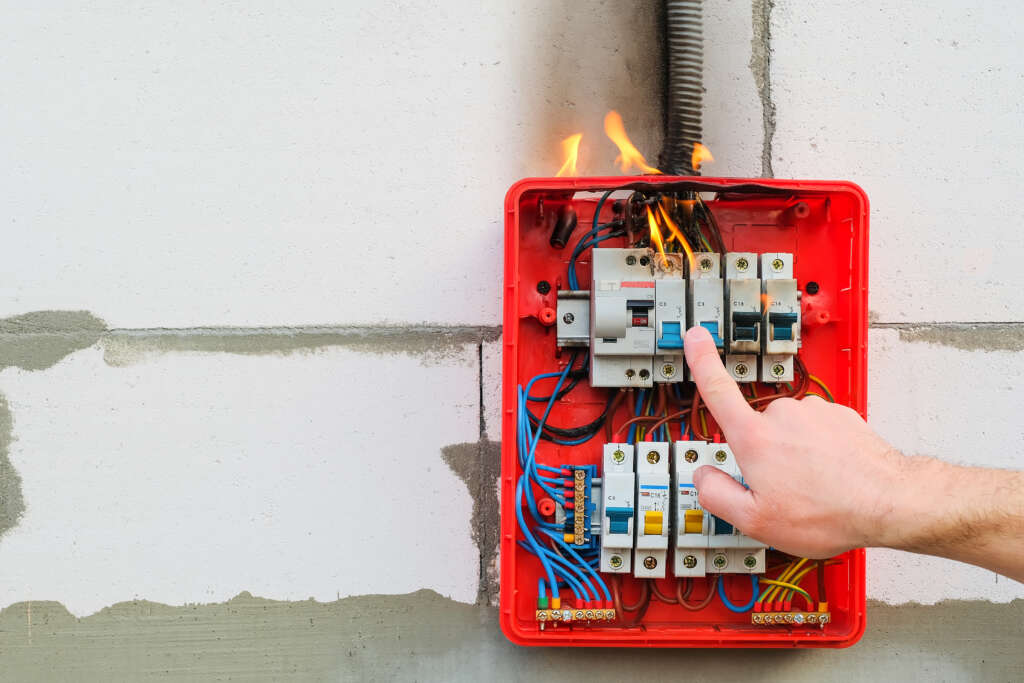
Electrical fires start quietly behind the scenes. A flickering hallway light or an outlet that feels warm to the touch can be a warning sign. The worn wiring and overloaded circuits generate intense heat that can ignite insulation and wooden studs in seconds.
According to the U.S. Fire Administration, electrical failures cause tens of thousands of home fires every single year. Most of these incidents are preventable with basic maintenance and early detection.
Read here to learn about major electrical safety prevention measures.
Home Electrical Safety Fire Prevention
By following smart strategies, you can keep your home safe from electrical fires. It can keep your property intact and your family safe.
Stop Overloading Your Outlets and Power Strips
We all have that one outlet behind the TV or desk with three adapters and a power strip crammed into it. But standard wall outlets are built to handle only a specific amount of electricity at a time. When you pull too much power through a single point, the wires inside the wall heat up fast.
Never plug space heaters, portable air conditioners, or microwave ovens into extension cords or multi-outlet adapters. Plug high-draw appliances directly into dedicated wall outlets.
Upgrade Outdated Circuit Breakers to AFCIs
Old-school circuit breakers are designed to trip only when a circuit gets completely overloaded or suffers a direct short. They can’t catch dangerous arcing. Arcing happens when electricity jumps across loose connections or frayed wires. It creates hot sparks that can set your inner walls on fire.
| Device Type | What It Detects | Main Benefit |
|---|---|---|
| Standard Breaker | Circuit overloads and direct short circuits | Prevents overheated panel wiring |
| GFCI Outlet | Moisture-related current leaks | Prevents electrical shock near water |
| AFCI Breaker | Sparks and irregular electrical arcing | Prevents hidden framing and wall fires |
Check Plugs, Cords, and Outlets for Heat Damage
Get into the habit of inspecting power cords and wall plates throughout your house. Damaged insulation exposes live wires, while loose connections create electrical resistance.
- Feel wall plates: Outlets and light switches should never feel warm or hot to the touch.
- Listen for sounds: A buzzing, clicking, or sizzling sound behind a switch indicates loose wiring.
- Look for discoloration: Dark scorch marks around outlet slots mean current is arcing internally.
- Replace frayed cords: Throw away power cords with cracked insulation or exposed metal strands.
Keep Extension Cords Temporary
Extension cords are meant for temporary jobs, like plugging in a vacuum cleaner or setting up outdoor holiday lights. They don’t have the thick, heavy-duty protection built into the permanent wiring inside your walls.
Running cords under area rugs traps heat that cannot escape. Walking over covered cords breaks down internal copper strands over time. The U.S. Consumer Product Safety Commission guide on extension cords warns that using worn or undersized cords indoors is a major cause of fires and electrical shocks. If you rely on extension cords to power everyday electronics, you need to hire an electrician to install extra wall outlets.
Pay Attention to Flickering and Dimming Lights
Lights that flicker when your refrigerator starts up or dim when the HVAC turns on tell you your electrical system is struggling to deliver steady power to your appliances.
Loose terminal connections inside switch boxes generate localized heat. If tightening light fixtures does not solve the problem, your panel may need an upgrade to handle modern energy loads.
Install GFCIs Near All Water Sources
Water and electricity are a dangerous combination. Ground-Fault Circuit Interrupters (GFCIs) monitor the balance of power between hot and neutral wires.
If water splashes an outlet or a hairdryer drops into a sink, the GFCI cuts off electricity in milliseconds. Install GFCI outlets in kitchens, bathrooms, basements, laundry rooms, and outdoor spaces. Test them monthly by pressing the “Test” and “Reset” buttons on the faceplate.
Simple Pre-Inspection Steps That Prevent Surprises
Staying ahead of electrical problems keeps your house running smoothly and prevents emergency repairs. Following simple residential electrical inspection tips helps you catch small risks before they turn into major safety hazards.
- Clear a three-foot space around your main electrical panel for easy access.
- Label every circuit breaker clearly so you can cut power quickly during an emergency.
- Ensure all outdoor junction boxes have weatherproof covers.
- Check that light bulbs match the maximum wattage rating printed inside your lamp sockets.
Reviewing these Pre-Inspection Steps That Prevent Surprises keeps your home systems running safely and reliably.
Schedule Professional Electrical Checks
Visual checks around the house are great for daily safety, but you can’t see what’s happening inside wall voids or on the main panel bus bars. Professional inspectors use thermal tools and specialized meters to spot hidden danger zones before damage happens.
If your home is over twenty years old, or if you notice recurring breaker trips, booking Comprehensive Home Inspection Services gives you a full picture of your building’s health. Certified inspectors check grounding systems, evaluate panel capacities, and spot dangerous wiring methods like older knob-and-tube or ungrounded aluminum lines.
Make Electrical Safety Part of Your Home Maintenance
Electrical problems don’t always announce themselves with sparks or smoke. Sometimes, the warning is a breaker that keeps tripping, an outlet that looks discolored, or lights that flicker for no obvious reason. Noticing those changes can help you know when it’s time to bring in a professional.
With 175+ trained personnel and more than 2,400 inspections completed each month, GreenWorks Inspections & Engineering brings scaled experience to every property assessment.
Our inspectors evaluate visible electrical components alongside the home’s other major systems, giving you clear findings and a better understanding of where further attention may be needed.
Put experienced eyes on the home before an electrical warning sign becomes something you wish you’d checked sooner. Schedule your inspection with GreenWorks Inspections & Engineering today.